
ESD-Sensitive Materials on AMRs: Transport Efficiency Is Not Enough
ESD-Sensitive Materials on AMRs: Transport Efficiency Is Not Enough
The protection gap often appears after material leaves the workstation
In electronics manufacturing, ESD controls are often well established around trays, totes, benches, personnel grounding, and flooring. The weak point can emerge when material is placed on a mobile robot. It is easy to reduce the handoff to a simple statement: the tote is loaded and the robot will deliver it. Yet the most consequential questions sit inside the trip: does the tote remain in a controlled condition, is the load deck compatible with it, does the destination provide an acceptable transfer point, and who owns the material if the mission is interrupted?
For this reason, an AMR deployment for ESD-sensitive material should not be judged only by travel time. Its purpose is to keep protection status legible from release through loading, transport, arrival, handoff, and recovery. The AMR becomes a moving node in the protection chain rather than a blank interval between fixed workstations.
Define a mobile ESD load unit before selecting the vehicle
The first design decision is not the robot model; it is the load unit. For each material family, the tote, insert, lid, tray, identification method, and permitted stacking condition should be treated as one managed unit. A flatbed AMR needs a deck that matches the tote footprint, locating features, and center of gravity. The tote must be visibly and fully supported by the platform, never improvised with edge contact or temporary spacers.
Mission creation should also distinguish the material type, its protective packaging, the permitted travel zones, and the approved receiving point. These states do not need to become an overbuilt data model, but they must influence route, station, and exception rules. When the load unit and mission state travel together, ESD protection becomes an executable logistics constraint instead of a manual reminder.
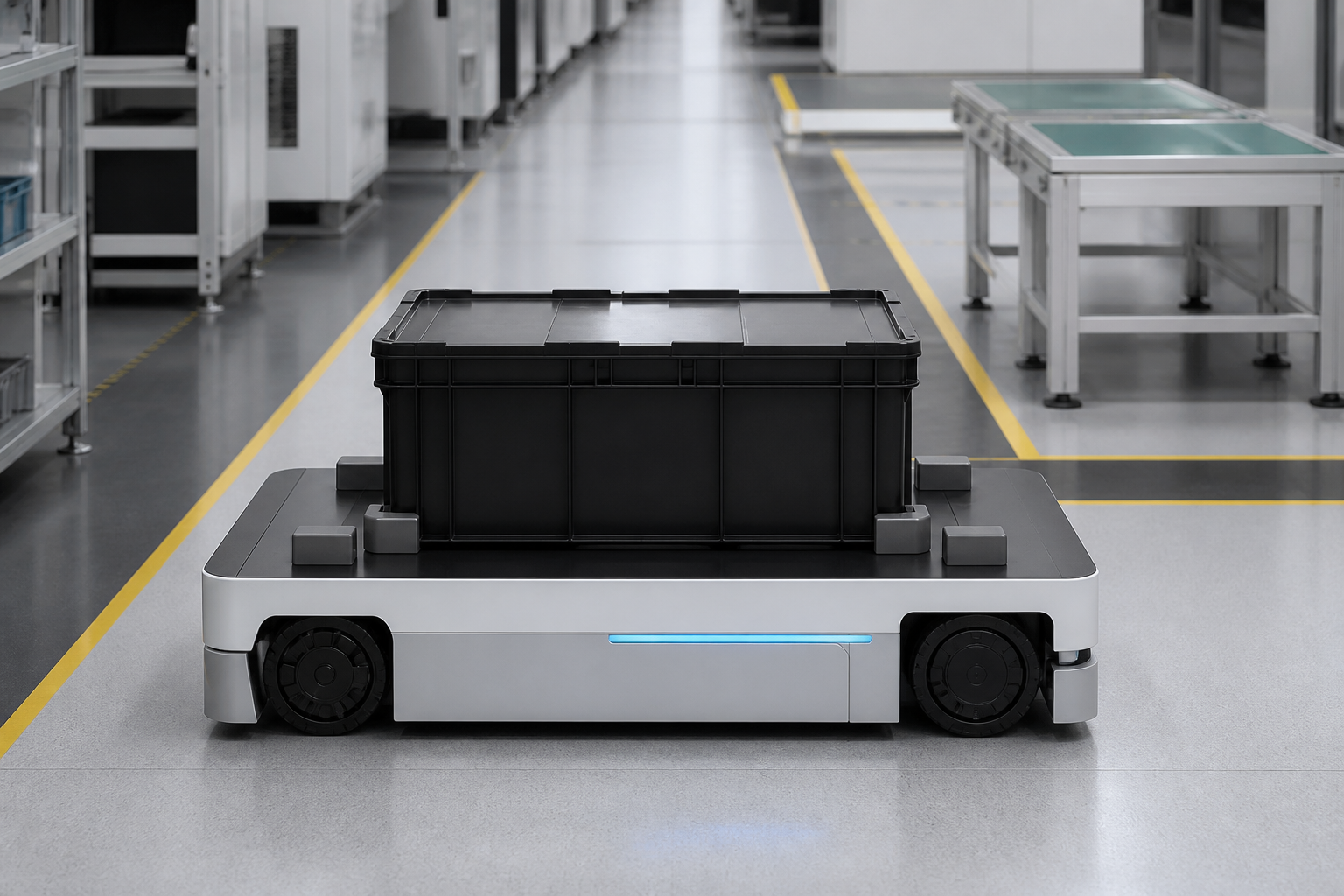
Figure 1: A conductive ESD tote is fully supported and located on a flatbed AMR
The transport rule is more than a speed limit
Normal line-side AMR missions focus on obstacle avoidance, passage, and arrival. In an ESD-sensitive flow, the system should additionally watch load stability, unauthorized movement through uncontrolled areas, abnormal dwell time, and unconfirmed tote opening or substitution. Gentle motion matters, but speed settings alone cannot protect the process.
A practical approach is to tier missions by risk. Closed standard totes may use a normal controlled route. Materials with stricter exposure or receiving conditions can use a constrained route, designated waiting locations, and a positive arrival permission. If congestion, low battery, or a fault interrupts the mission, the system should do more than display “in delivery.” It should invoke a defined preservation action: move to an approved wait point where possible, keep the tote closed, and notify the receiving side.
Treat the handoff point as a controlled state change
In many projects, arrival means simply parking beside a workstation. For ESD-sensitive material, arrival should be a set of confirmed conditions: the receiving table is available, its height is compatible with the AMR deck, the workstation or receiving carrier meets the required protection condition, and the tote identity and quantity are confirmed. The purpose of a same-height transfer table is not visual polish; it makes the support relationship and ownership transition unambiguous.
A useful handoff sequence has four states: position confirmed, receipt permitted, carrier confirmed, and mission completed. Until all four are true, the moving side remains responsible for the material and the robot follows a wait or retreat rule. This avoids the gray zone where the vehicle has arrived but no one has accepted the tote, while creating readable events for quality traceability.
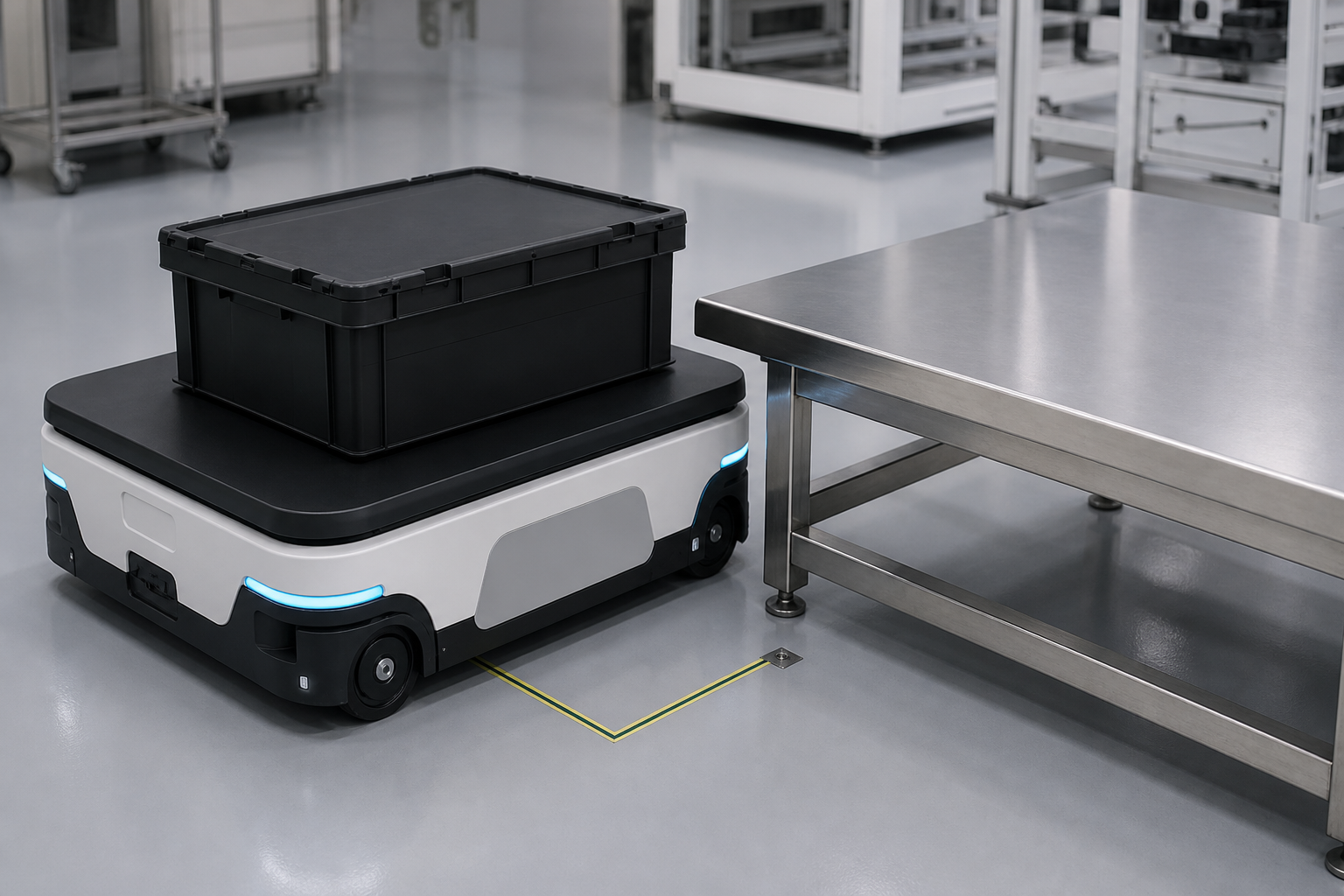
Figure 2: A same-height transfer table supports a controlled handoff at the destination
Exception recovery is the real stress test
The reliability of the design is often decided by exceptions: a workstation becomes unavailable, an aisle is blocked, a tote appears damaged, packaging is found incomplete, or manual intervention is required mid-mission. The system must be able to answer three questions: where is the material, is it still within an allowed protection condition, and who may take ownership next, under what conditions?
This does not require excessive automation. For higher-risk missions, a small set of explicit rules is usually more effective: assigned waiting locations, no arbitrary reassignment, confirmed recovery stations, coded exception events, and release only after review. That discipline is more valuable than a single delivery-success metric that hides undefined boundaries.
Make AMRs part of quality logistics
In electronics manufacturing, faster movement matters, but it should not be separated from material protection. A mature AMR delivery design connects protective packaging, load contact, controlled routes, receiving permission, and exception recovery so every mission has an explainable state.
When that chain is designed deliberately, AMRs do more than reduce manual walking. They turn logistics requirements scattered across workstations into daily actions that can be verified and reviewed. For ESD-sensitive materials, the right question is not only how fast the vehicle moves, but whether protection keeps moving with the material.
A practical rollout sequence
Begin with one material family and one clearly bounded route. Confirm the tote specification, deck support, approved waiting locations, destination condition, and ownership transition before expanding fleet size or route coverage. A short pilot should deliberately include normal delivery, destination unavailable, route blockage, and tote-recovery scenarios.
Operational evidence should be reviewed with both manufacturing and quality teams. Useful records include mission state changes, dwell at waiting locations, receiving confirmation, intervention reason, and recovery outcome. The aim is not to create a second quality system around the robot. It is to make the relevant logistics state visible where quality already needs it.
Chengdu Heli Intelligent can apply this logic to flatbed AMR workflows that require stable carrier support and controlled line-side handoffs. The exact controls should always be validated against the site ESD program, material packaging specification, and process risk assessment.


邮箱
邮箱验证*
*


