
AMR Localization Health: Turning Position Confidence into a Reliable Operations Capability
When an AMR drifts slightly or needs an extra correction before it docks, the first explanation is often “the map is not accurate enough.” In practice, the map is only one link in the localization chain. The same map can perform very differently after temporary inventory blocks a rack face, a polished floor becomes more reflective, a corridor presents repetitive geometry, or equipment is moved. What affects continuous operations is not whether a map file exists, but whether the robot can keep judging whether its current pose is still trustworthy.
For a manufacturing site, localization should not be treated as a one-time commissioning parameter. It is an operating health indicator. It affects whether a vehicle can travel predictably through a narrow aisle, arrive at a workstation with a stable orientation, and choose a controlled degradation path when the environment becomes uncertain rather than persisting with the original motion.
1. A position estimate is not the same as a trusted position
A localization system combines sensor observations, wheel odometry, and a known map to continuously estimate position and heading. This is more than assigning a point on a drawing. At every moment, the system must assess whether its information sources still agree. Widely used robotics localization frameworks publish both pose and uncertainty, a useful reminder that an operations team should ask more than “does the robot have a position?” The more relevant question is how stable that estimate is for the action about to be performed.
In intralogistics, trusted position has at least three practical meanings. Lateral deviation should remain bounded on the intended route. Heading error should remain within the tolerance of the next docking action. And the system should detect a meaningful loss of confidence when environmental features weaken or disappear. A task-completion KPI alone can hide small failures through manual intervention, repeat alignment, or slow waiting, until a peak period turns them into congestion and lost cadence.
2. Localization often degrades through feature distortion, not complexity
The most overlooked places are not necessarily the most complex. They are often areas that appear unchanged to people while the stable features available to sensors have degraded. A long aisle with highly repetitive rack bays gives few distinctive cues. Large areas of glass, polished metal, transparent curtains, or glossy epoxy can create unstable returns or visual interference. Temporary totes, open doors, and mobile fixtures can also hide references that were present when the map was built.
None of this means an AMR cannot work in the area. It means one speed policy and one docking policy should not be applied everywhere. A useful engineering step is to build a localization-conditions layer: mark routes with stable, rich geometry as well as areas with reflection, repetition, obstruction, or frequent change. Overlay stations, turns, doorways, and handoff positions. The discussion then moves from a vague question about localization quality to a practical question: what operating boundary is appropriate for this route segment and this job?
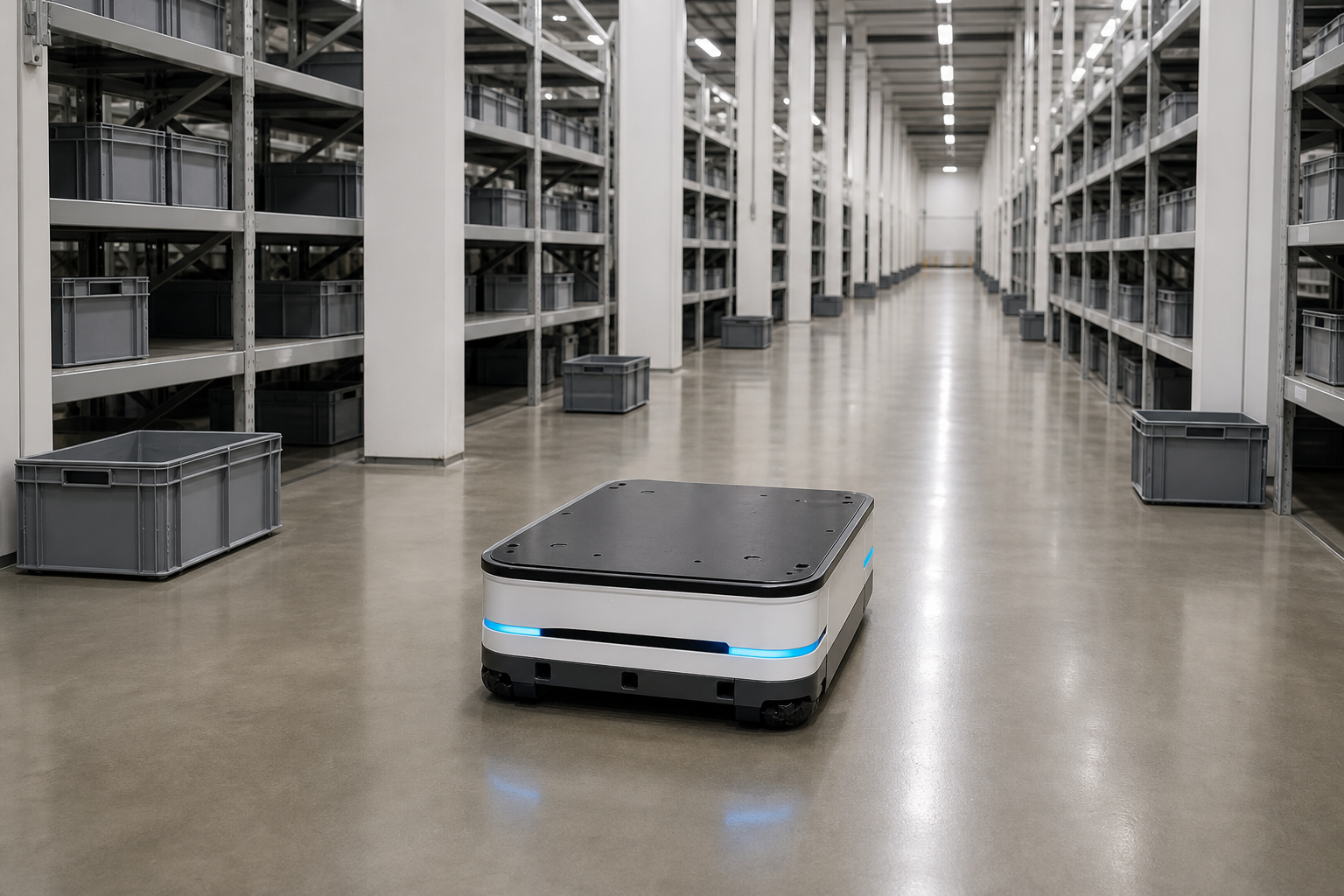
Figure 1: Repetitive aisle geometry and reflective flooring can weaken stable localization features
3. Connect localization health to task behavior, not only a diagnostic screen
Localization health is most useful when it changes vehicle and fleet behavior. A site can define normal, attention, restricted, and recovery states, with a clear action for each. In the normal state, the AMR follows the planned cadence. In the attention state, it reduces speed before sharp turns, narrow passages, and precise stations. In the restricted state, it avoids high-precision docking or constrained travel and moves to a defined waiting point. After recovery, it re-establishes position in a stable area before returning to work.
The important point is not a universal threshold. The threshold should be tied to operational risk. A short confidence fluctuation may be manageable for a simple move from a buffer to a wide staging area. A task that must interface with a machine, conveyor, rack, or precise transfer point should demand a stronger localization condition. Relating health state to job type, route type, and station tolerance prevents both excessive stopping and forced precision work under unsuitable conditions.
4. Design a recovery path for uncertainty
A mature recovery strategy should not depend on an operator arriving to push a vehicle or repeatedly restart it. A facility can designate a small number of recovery nodes in locations with stable cues: a clearly structured cross-aisle, a defined waiting zone, or a buffer outside a workstation with good sensor visibility. When confidence remains low, the AMR first slows safely and stops high-precision actions. If motion remains controlled, it follows a restricted path to the recovery node, validates or re-establishes its pose, and then resumes or receives a reassigned job.
The reason for recovery should be captured as well. Was a view blocked by temporary material? Did a reflective floor create a recurring issue under certain lighting? Did wheel slip introduce odometry error? Recording events by route segment, time window, job type, and duration distinguishes occasional interference from a design issue. The former may need a short-term operating rule; the latter may justify changes to layout, fixture placement, housekeeping practices, or maintenance planning.
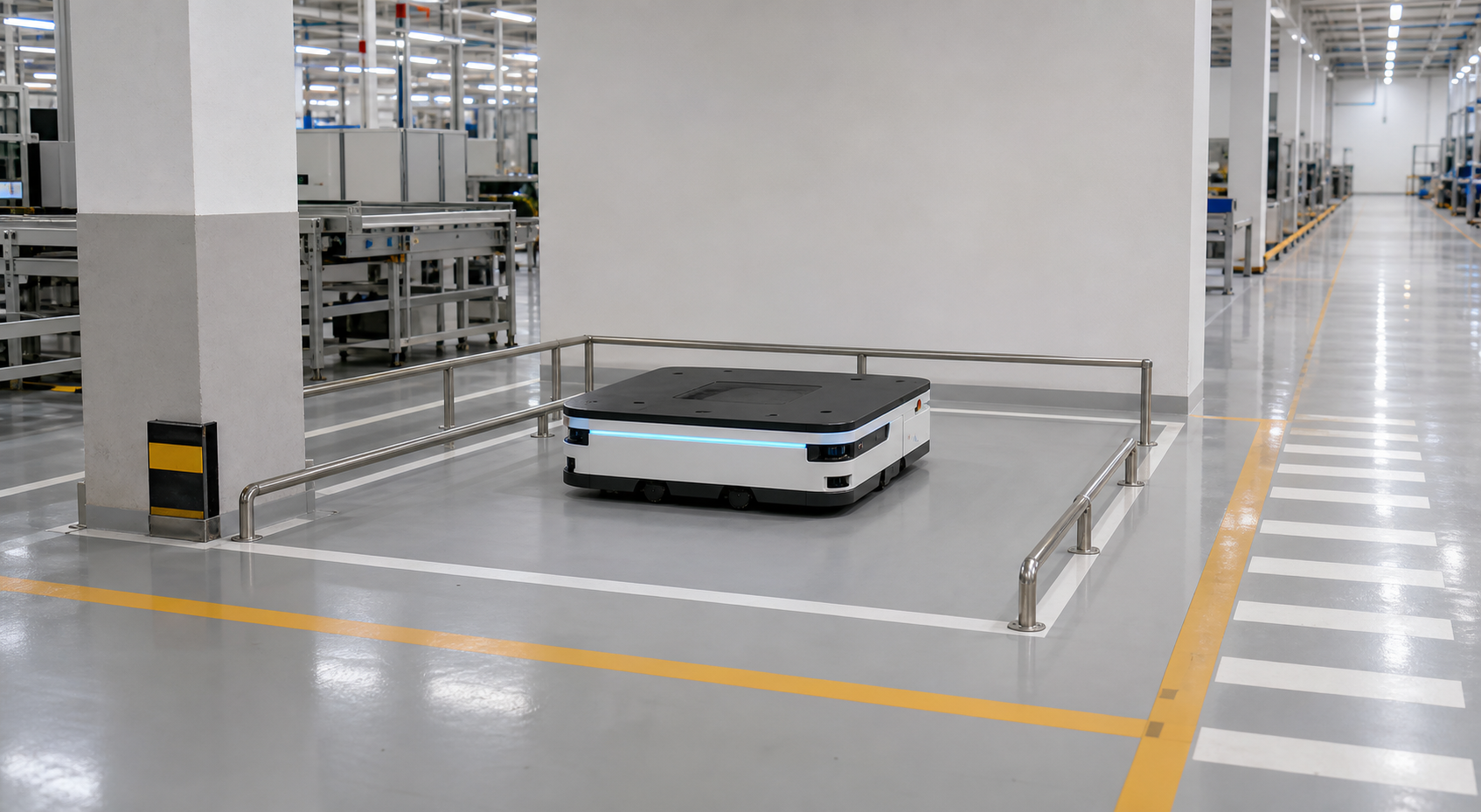
Figure 2: A recovery node in a geometrically stable area supports controlled re-localization
5. Validate repeatability and recovery, not a single arrival
Localization validation is stronger when it tests repeatability and recovery rather than one successful trip. Select representative routes and critical stations, then repeat observations with different loads, operating periods, temporary obstructions, or changed floor conditions. Review route deviation, docking posture, correction attempts, state transitions, and recovery time. The measurement set does not need to be elaborate, but it should answer three questions: when did the system recognize uncertainty, did it enter the appropriate state, and could it return to predictable cadence afterward?
When localization health becomes part of task strategy, AMR behavior evolves from “trust the coordinate and keep moving” to “understand uncertainty and continue within controlled limits.” That is particularly valuable in factories that change every day. It lets the fleet remain efficient when conditions are stable, remain deliberate when they are not, and turn every meaningful exception into evidence for improving the operating boundary.


邮箱
邮箱验证*
*


